Pose Studio

Pose is where a picture stops being a portrait and becomes a scene. This gives you direct control over gesture, weight, and camera - The three things that carry meaning in a figure drawing.
Weight is what sells a pose
A figure standing evenly on both feet reads as stiff. Shift the weight onto one leg and the whole body responds: hip, shoulder line, and head angle all follow.
- Say where the weight sits before anything else.
- Describe what the character is doing, not how they look.
- Contact points - A hand on a wall, a shoulder against a door - Anchor a figure in space.
Camera and pose are one decision
The same pose reads three different ways depending on where the camera sits.
| Angle | Reads as |
|---|---|
| Eye level | Intimate. The viewer is a participant. |
| Low angle | Power and scale. The subject dominates. |
| High angle | Vulnerability or isolation. |
Why hands go wrong
Hands are the hardest thing for these models. Poses where hands are partly occluded or resting on something succeed far more often than open, splayed hands. Negative prompts help a little; composition helps more.
Poses with weight and camera directed

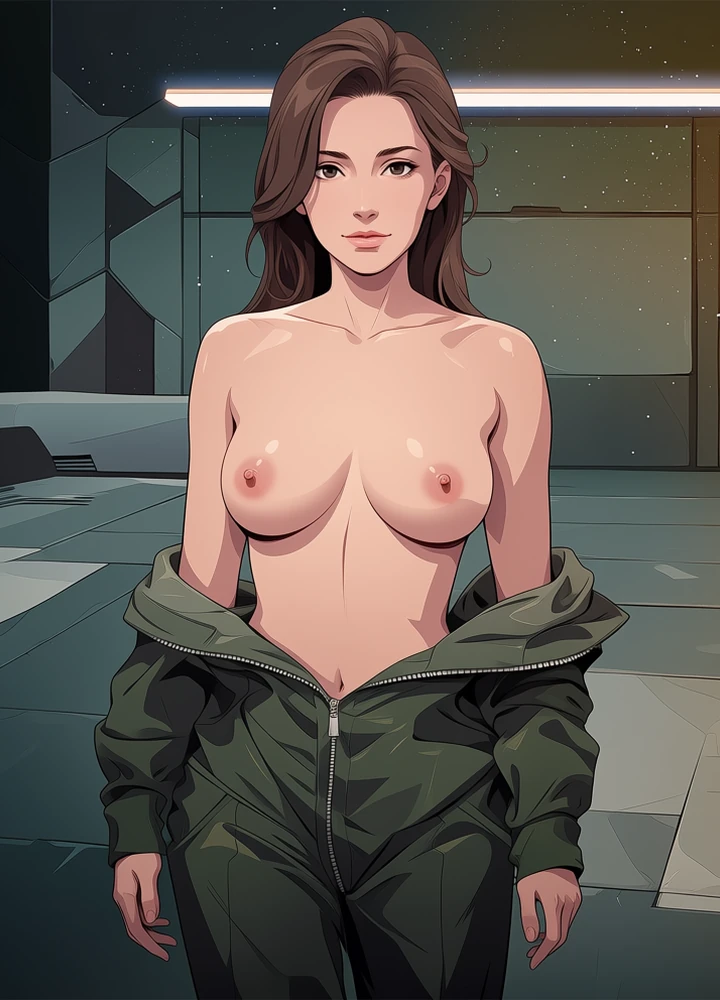

Real before-and-after pairs, one per case. Source photographs are genuine API output; the conversions here were rendered with a stand-in model while the converter's provider was unavailable, so treat them as style references rather than shipped-tool output.
Worked example: a weighted standing pose that does not read as stiff
| Composition | Story ratio, 768x1344 |
|---|---|
| Model | WAI Illustrious |
| Camera | Low angle, full shot |
| Cost | 5 credits |
The exact instruction
adult woman age 30+, weight on her left leg, right hip raised, left hand resting on a door frame, shoulders turned away from camera, head turned back, low angle full shot
What comes back
Naming the weight-bearing leg makes the hip, shoulder line and head angle resolve together. The hand on the door frame is a contact point, which anchors the figure and hides the hardest thing to draw.
When it goes wrong
| What you see | Why | What to change |
|---|---|---|
| The pose looks stiff | Weight is even on both feet | Say which leg carries the weight |
| Hands are malformed | Open, splayed hands are the hardest case | Give the hands something to rest on or occlude them |
| The pose is right but dull | Camera is at default eye level | Try low or high angle - See camera angles |
Common questions
Can I keep my character while changing the pose?
Largely. Keep the seed and model, and expect small facial drift on large pose changes.
Why do hands come out wrong?
Hands are genuinely hard for these models. Occlude them or rest them on something and success rates rise sharply.
Which camera angle should I default to?
Eye level. It is neutral, and you can move deliberately from there - See the camera guide.
Where to go next
This tool is usually used alongside the camera guide, adjust the face and define the character first.